Choosing the wrong cushion shade can make your face look too pale, dull, or noticeably different from your neck—even when the formula and coverage perform well.
To choose a cushion shade more accurately, do not consider only whether your skin is fair or deep. You should look at both your skin tone and undertone, then test the shade along your jawline before making a decision.
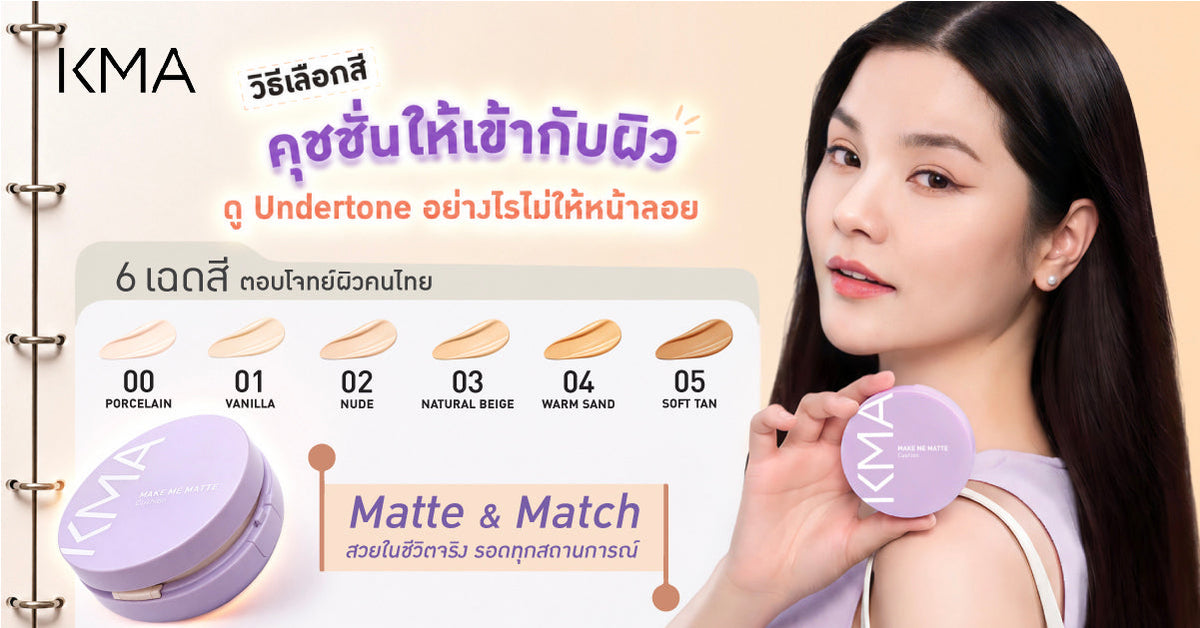
This guide explains how to choose from the six shades of KMA Make Me Matte Cushion, helping you achieve a smoother and more natural-looking complexion.
Quick Guide to Choosing a Cushion Shade
Before going into detail, follow these four steps:
- Identify whether your skin tone is fair, medium, tan, or deep.
- Determine whether your undertone is cool, warm, or neutral.
- Select two or three shades closest to your complexion.
- Test them along your jawline and choose the shade that blends most naturally with your neck.
The best match should not appear as a visible light or dark stripe. It should blend into your skin with almost no noticeable edge.
What Is the Difference Between Skin Tone and Undertone?
Many people choose a cushion based only on how fair or deep their skin appears. However, undertone is equally important.
| Term | Meaning | Examples |
|---|---|---|
| Skin Tone | The visible depth or lightness of the skin | Fair, medium, tan, deep |
| Undertone | The underlying colour beneath the skin, which generally changes less | Cool, warm, neutral |
Skin tone may change due to sun exposure or temporary dullness, while undertone generally remains more consistent. This is why people with similar skin-tone depth may still suit different cushion shades.
How to Identify Your Undertone
Undertones are generally divided into three main groups: cool, warm, and neutral.
| Undertone | General Skin Appearance | Suggested Shade Family |
|---|---|---|
| Cool | Pink, red, or bluish tones | Start with C shades |
| Warm | Yellow, golden, or peach tones | Start with W shades |
| Neutral | A balance of pink and yellow tones | Start with N shades |
Check the Veins on Your Wrist
Look at the veins on your wrist under natural light.
- Blue or purple-looking veins may indicate a cool undertone.
- Green-looking veins may indicate a warm undertone.
- A mixture of blue and green, or veins that are difficult to identify, may indicate a neutral undertone.
Compare Silver and Gold Jewellery
- If silver jewellery makes your complexion look brighter, you may have a cool undertone.
- If gold jewellery complements your skin more, you may have a warm undertone.
- If both suit you, you may have a neutral undertone.
Check Your Neck and Chest
Do not assess your undertone from your face alone. Redness, dullness, or skincare products may make facial skin appear different from your natural tone.
Looking at the neck and upper chest may give you a clearer indication of your overall undertone.
These methods should be used only as an initial guide. Testing the cushion directly on your skin is still the most reliable way to confirm your shade.
What Do C, W, and N Mean on Cushion Shades?
KMA Make Me Matte Cushion uses letters to indicate the undertone of each shade.
| Code | Meaning | Best Suited For |
|---|---|---|
| C | Cool | Pink or reddish undertones |
| W | Warm | Yellow or golden undertones |
| N | Neutral | A balanced combination of pink and yellow undertones |
The number before each letter indicates the shade depth. Lower numbers generally represent lighter shades, while higher numbers indicate deeper shades.
KMA Make Me Matte Cushion: Six-Shade Guide
KMA Make Me Matte Cushion is available in six shades, ranging from fair skin with pink undertones to deep skin with reddish undertones.
| Shade | Undertone | Suitable Skin Tone | Compare With |
|---|---|---|---|
| 00C Porcelain | Cool | Fair skin with pink undertones | 01N if you are unsure whether your skin is distinctly pink |
| 01N Vanilla | Neutral | Fair skin with a balanced undertone | 00C or 02W |
| 02W Nude | Warm | Fair skin with yellow undertones | 03W if it appears too light |
| 03W Natural Beige | Warm | Medium skin with yellow undertones | 02W |
| 04N Warm Sand | Neutral | Tan skin | 03W or 05C |
| 05C Soft Tan | Cool | Deep skin with reddish undertones | 04N |
This table is intended as a starting point for selecting shades to test. Actual skin colour and undertone can vary from person to person.
How to Test Cushion Shades More Accurately
The best area for testing a cushion is along the jawline extending toward the neck. This helps you see whether the shade blends naturally with both your face and neck.
Shade-Testing Steps
- Select two or three shades close to your complexion.
- Apply each shade in a small stripe along your jawline.
- Blend the edges slightly.
- Allow the cushion to set.
- Check the shades in natural light.
- Choose the shade that blends most naturally with your neck.
Avoid testing only on the back of your hand, as the skin on your hand may differ from your face in both depth and undertone.
Why Should You Wait for the Cushion to Set?
The colour of a cushion may look different immediately after application compared with how it appears once it has set.
While testing, check whether:
- The shade becomes darker.
- The colour appears more yellow or pink.
- The shade still blends with your neck.
- The appearance changes under natural light.
Do not choose a shade while the cushion is still freshly applied and wet.
What Should You Do If You Are Between Two Shades?
When your skin falls between two shades, prioritise the shade that blends most naturally with your neck.
Choose the Slightly Deeper Shade When:
- Your face is lighter than your neck.
- You are concerned about your face looking too pale.
- You prefer a natural-looking finish.
- Your skin may become deeper after sun exposure.
To brighten the centre of the face, use concealer selectively instead of choosing a cushion that is too light for your entire face.
Common Mistakes That Make the Face Look Too Light or Dull
A mismatched complexion can result from several factors, not only from choosing a shade that is too light.
Common mistakes include:
- Choosing a shade much lighter or deeper than your skin
- Selecting a cushion with the wrong undertone
- Testing the shade only on the back of the hand
- Failing to compare the shade with the neck
- Choosing a shade only from images shown on a screen
- Testing under yellow or artificial store lighting
- Applying too much cushion
- Layering a powder that is lighter than the cushion
Testing along the jawline and checking the shade under natural light can significantly reduce the risk of choosing the wrong colour.
Tips for Applying Cushion Naturally
Once you have selected the right shade, your application technique will also affect how naturally the colour blends with your skin.
- Pick up a small amount of product.
- Start at the centre of the face and blend outward.
- Apply less product around the hairline and jawline.
- Build coverage only where needed.
- Avoid repeatedly layering thick amounts over the entire face.
Applying cushion in thin layers helps the shade blend more naturally with both your skin and neck.
Frequently Asked Questions
Q: Which KMA Make Me Matte Cushion shade is suitable for fair skin with yellow undertones?
A: Start by testing 02W Nude, which is suited to fair skin with yellow undertones. If it appears too light, compare it with 03W Natural Beige.
Q: Which KMA cushion shade is suitable for tan skin?
A: Start by testing 04N Warm Sand, which is designed for tan skin with a neutral undertone. Always test it along your jawline before purchasing.
Q: Can I choose a cushion shade from images shown on a screen?
A: Screen images can be used as a guide, but colours may vary due to display settings, photography lighting, and individual skin tone. Test the product directly on your skin whenever possible.
Q: Which shade should I choose if I am between two shades?
A: Choose the shade that blends most naturally with your neck. If you are concerned about your face looking too pale, select the slightly deeper shade and brighten the centre of your face with concealer.
How to Choose a Cushion Shade Without Making Your Face Look Too Pale
For a more accurate cushion match, consider both your skin tone and undertone rather than choosing based only on how fair your skin appears.
Those with pink undertones can begin by testing C shades. Yellow or golden undertones can start with W shades, while those with a balance of pink and yellow can begin with N shades.
The most important step is to test two or three shades along the jawline, allow them to set, and choose the one that blends most naturally with your neck.
The right cushion shade does not need to make your skin look lighter. It should help your complexion appear smooth, balanced, and naturally even.